

STEM Toys for Preschoolers: What to Look for Before You Buy
Choosing STEM toys for preschoolers is less about finding a label that promises learning and more about finding a safe material that invites children to explore. A useful STEM toy gives a child something to touch, change, compare, or explain. It also fits the child's age, the family's space, and the adult supervision that is realistically available.
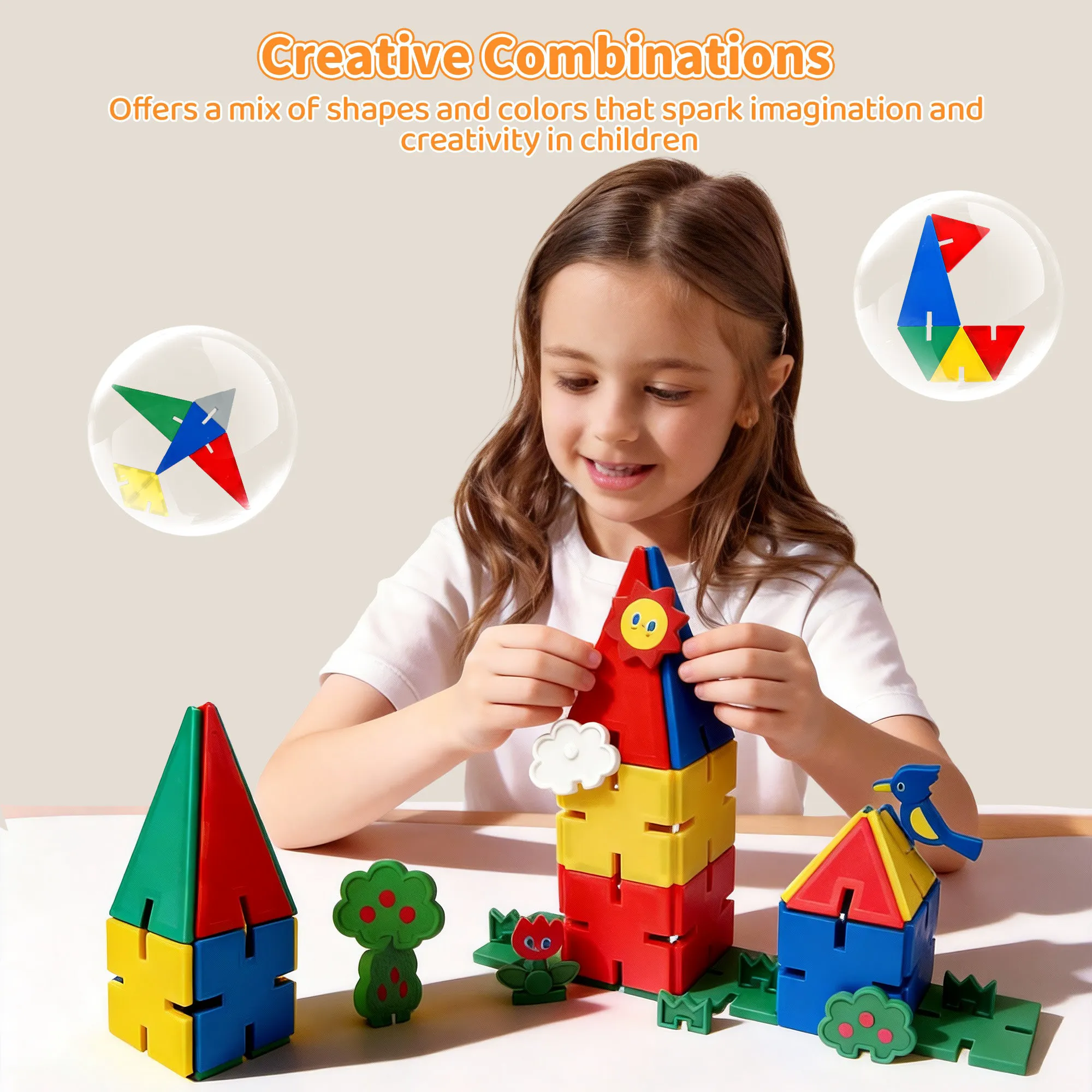
Magnetic tiles are one possible choice, alongside wooden blocks, large interlocking bricks, foam blocks, connector sets, and simple model kits. No category is right for every preschooler. The best decision comes from matching the play format to the child rather than choosing the toy with the longest feature list.
Start with age fit and safety
Read the exact age grade, warning statements, component list, and care instructions before comparing colors or piece counts. A product labeled 3+ may suit many preschoolers, but it is not automatically appropriate for every child. Consider mouthing behavior, developmental needs, younger siblings, and whether an adult can stay nearby.
Use this screening checklist:
| What to check | Why it matters | Practical question |
|---|---|---|
| Age grade | It reflects the manufacturer's intended audience | Does the label match the child who will use it? |
| Small-parts warning | Loose parts may not fit a home with babies | Can the set be stored securely away from younger children? |
| Product condition | Cracks and broken connectors can change the risk | Can an adult inspect every piece before play? |
| Magnet enclosure | Accessible magnets are dangerous if swallowed | Will caregivers notice a split seam or missing section? |
| Recall information | Safety details can change | Have you checked the CPSC recall database? |
| Care guidance | Water, heat, or chemicals can damage some toys | Are the cleaning instructions specific to this product? |
The YRZtiles Classic and MagFlake products reviewed for this guide are marked ages 3+. Stop using any magnetic piece that cracks, splits, rattles, loses a section, has a sharp edge, or appears to expose a magnet. Do not repair a damaged magnetic toy with tape or glue for continued child use.
Look for open-ended play
STEM toys for preschoolers are most useful when children can make choices. A toy can invite STEM-related exploration when a child asks questions such as:
- How can I make this tower stand?
- Which shapes fit together?
- What changes when the base becomes wider?
- Can I repeat a color pattern?
- How could I build a bridge for a small paper character?
There should be room for more than one answer. Magnetic tiles can become flat pictures, low walls, houses, towers, bridges, or pretend-play settings. Wooden blocks may be better for stacking and balancing. Large interlocking bricks may suit a child who enjoys firm press-fit connections. Foam blocks can support larger floor builds where space permits. A themed model kit may be the right choice when a child wants step-by-step instructions rather than open-ended design.
Open-ended play does not guarantee an academic result. It creates opportunities to practice noticing, planning, spatial language, cooperation, and revision. Adults can support the process by asking one question and resisting the urge to take over the build.
Evaluate the physical design
Preschool hands need components that are manageable to grasp and separate. Ask whether the child can connect the basic pieces without excessive force. Check whether the set has a clear starting point, such as simple squares, triangles, or large blocks. A toy that is technically impressive but frustrating to handle may spend more time in storage than in play.
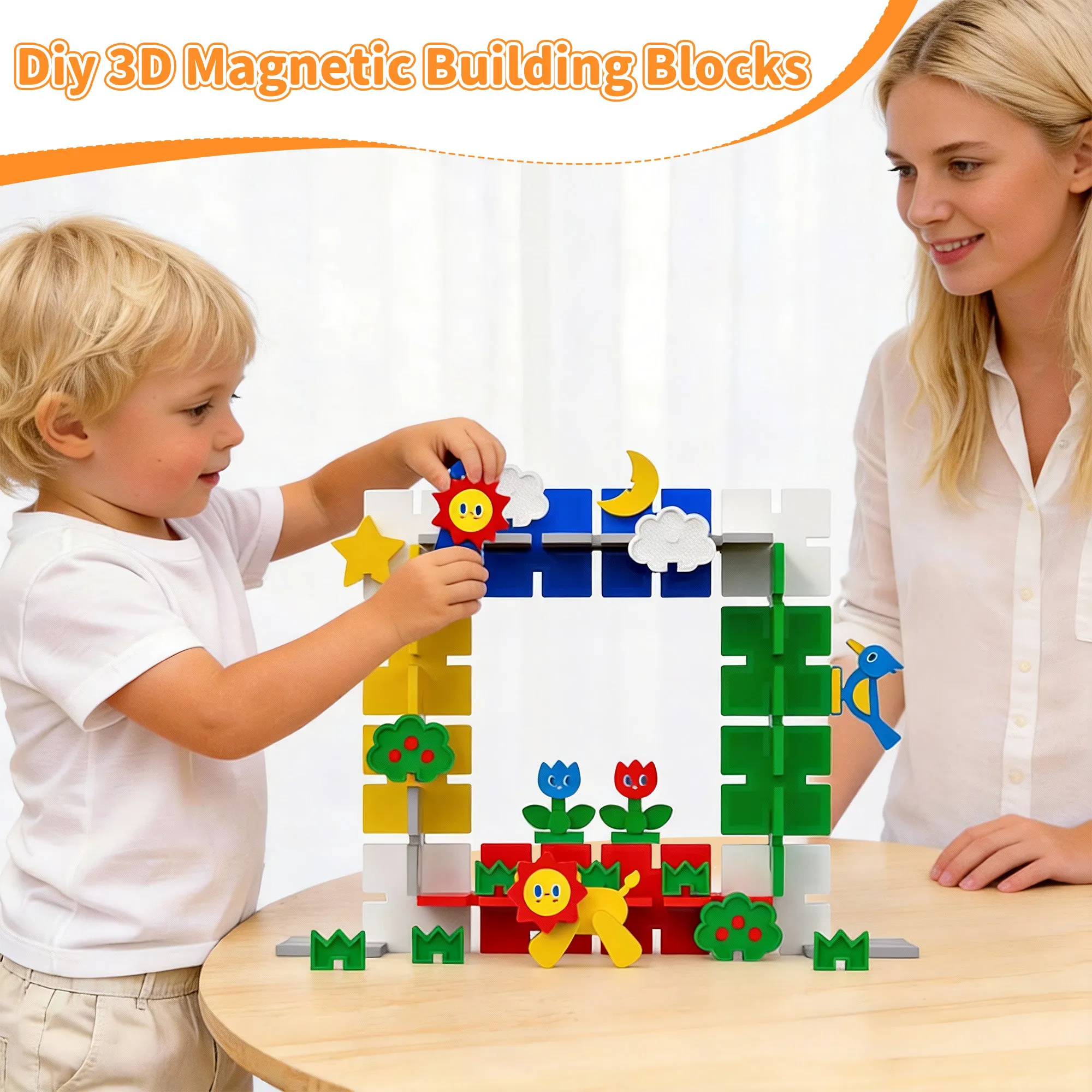
For magnetic tiles, inspect the edge construction and the way pieces connect. Do not rely on marketing phrases such as “strongest,” “unbreakable,” or “safe for every child.” Instead, look for a documented age grade, exact piece count, clear warnings, and instructions for inspection and care.
Match piece count to the play setting
More pieces can support larger structures, but a larger set is not automatically better. A 32-piece set may be easier for one child to sort, carry, and clean up. A 100-piece set can give siblings room to build at the same time. The 106-piece YRZtiles Classic set adds documented architectural pieces and one wheeled chassis, which may suit a child who wants windows, doors, garages, or a vehicle build. The separate 58-piece MagFlake set combines magnetic edges with a slot-interlocking format and themed pieces.
Review the exact listings for the YRZtiles 32-piece set, 100-piece set, 106-piece set, and MagFlake 58-piece set. Do not assume the 100-piece set has the 106-piece set's special components, and do not assume Classic tiles and MagFlake connect as one system.
Consider the household routine
A good STEM toy must work outside the product photo. Ask where the child will build, how long the activity usually lasts, and how the pieces will be stored. A tray or placemat can define a small building area. A lidded bin makes cleanup and piece counting easier. If the set will travel, choose a container that closes securely and does not make it likely that small pieces will fall under a seat.
Caregivers should be able to check the pieces quickly. A set with many components is less useful if missing parts go unnoticed. Make cleanup part of the activity: count, inspect, and return every piece to the same container. Keep the container away from children below the labeled age range.
Compare common STEM toy categories
| Category | What children often do | What to check before buying |
|---|---|---|
| Magnetic tiles | Arrange flat patterns and build 3D structures | Age grade, magnet enclosure, exact contents, storage |
| Wooden blocks | Stack, balance, create roads, and make symbolic scenes | Chips, splinters, finish wear, weight, storage |
| Large interlocking bricks | Press pieces together to build models and vehicles | Piece size, connection force, complexity |
| Foam blocks | Make large, low structures and active indoor scenes | Available floor space, cleaning, storage volume |
| Connector sets | Join rods, hubs, panels, or tubes | Component size, starting instructions, supervision |
| Model kits | Follow a sequence toward a themed result | Age grade, adult help, frustration level, missing parts |
The category should follow the child's play preference. A child who loves repeating patterns may enjoy magnetic tiles or a shape-sorting set. A child who likes building a single model may prefer a guided kit. A child who enjoys large physical play may need foam or oversized blocks instead of small tabletop pieces.
Add useful adult prompts
The adult's role is to make thinking visible without turning play into a quiz. Try:
- “What do you notice about the base?”
- “Which shape could close this gap?”
- “What is the same in these two designs?”
- “What would you change before trying again?”
- “Can you describe where the door is?”
For a preschooler, one question is often enough. Let the child explain with words, gestures, or a new build. Avoid promising that a particular toy will improve intelligence, guarantee school readiness, or produce a measurable skill.
Safety for magnetic construction toys
Magnetic toys deserve a consistent inspection routine. Children should not bite, chew, throw, or step on tiles. Do not build a structure intended to carry a child's body weight. Keep loose parts away from babies and children below the product's age range. If a magnet may have been swallowed or inserted into the body, seek immediate medical attention and do not wait for symptoms. The CPSC magnet safety guidance explains the seriousness of swallowed magnets.
A practical decision rule
Choose the toy that passes four tests: it is age-appropriate, physically manageable, interesting to the child, and realistic for the household to supervise and store. A smaller set that gets used often is more valuable than a large set that is too difficult to manage. Start with a short activity, watch how the child handles the pieces, and expand only when the play routine supports it.
The best STEM toys for preschoolers create a safe invitation to ask, build, compare, and revise. Product labels and documentation should guide the purchase; the child's questions should guide the play.