

Create a Magnetic Tile Delivery Van and Put Its Stops in Order
A small delivery route can begin with one wheeled van, three scraps of paper, and the kind of important package that turns out to be a folded note for the sofa. It is a handy answer for an after-school stretch when there is enough time to build something, but not enough time to create an entire magnetic-tile metropolis with zoning laws.
The idea is simple: build one delivery-van-inspired vehicle, make a few optional numbered stop cards, and follow the route in order. The route can run along a rug border, around a placemat, or from one end of the kitchen table to the other. If the plan changes halfway through because the bakery has become a dinosaur library, that is simply good route management.
Gather the van pieces and route cards
For this activity, use the YRZtiles 106pcs STEM Magnetic Tiles and Building Blocks Classic set. It has 106 pieces and one wheeled chassis, so the plan is to create one delivery vehicle at a time.
The useful pieces for a van-style build include squares and rectangles for a low body, triangles for a sloped cab or roof idea, and door-frame, door-panel, or window-style pieces for a pretend loading opening. There is no need to follow a strict piece count. Start with the part that looks like a vehicle, then stop adding pieces once it fits the story.
You will also want a few optional household props:
- Three to five small paper cards and a pencil or marker.
- Paper scraps, folded notes, or other very light items for pretend parcels.
- Optional toy figures, play food, books, trays, or cushions to become landmarks.
- A clear patch of floor, a placemat, a coffee table, or one end of a dining table.
Paper cards, parcels, figures, books, trays, signs, and other household props are optional and are not included with the set.
Keep the route deliberately small
The route does not need painted roads, traffic lights, or a bridge across the room. Pick a clear boundary that already exists: the edge of a rug, a table runner, or a row of books.
For a quick round, three cards are plenty:
- Pick up at the depot
- Deliver the parcel
- Return home
A longer weekend session can use five stops, but more cards can turn a playful route into a paperwork project. Save the sixth destination for another day.
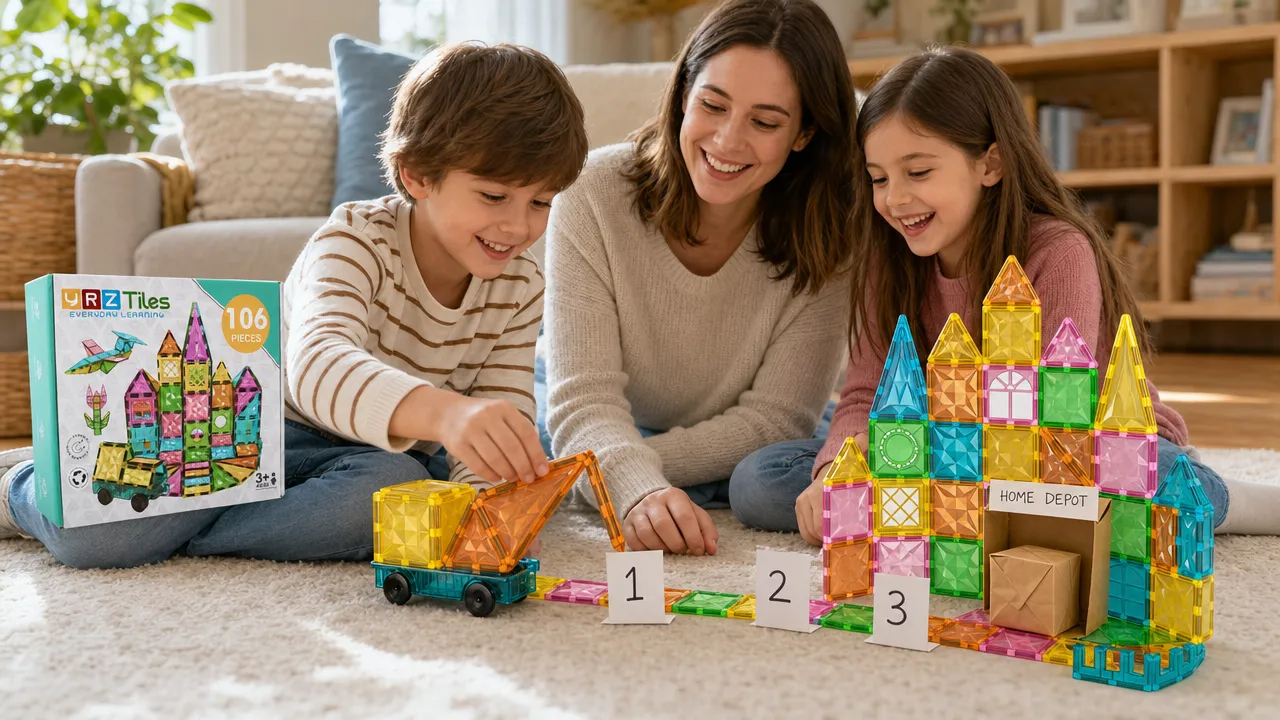
Build the van on the single chassis
A delivery van is a practical place to start. It has a clear job, it works in a small play area, and it leaves plenty of room for a child to decide what the "cargo" really is.
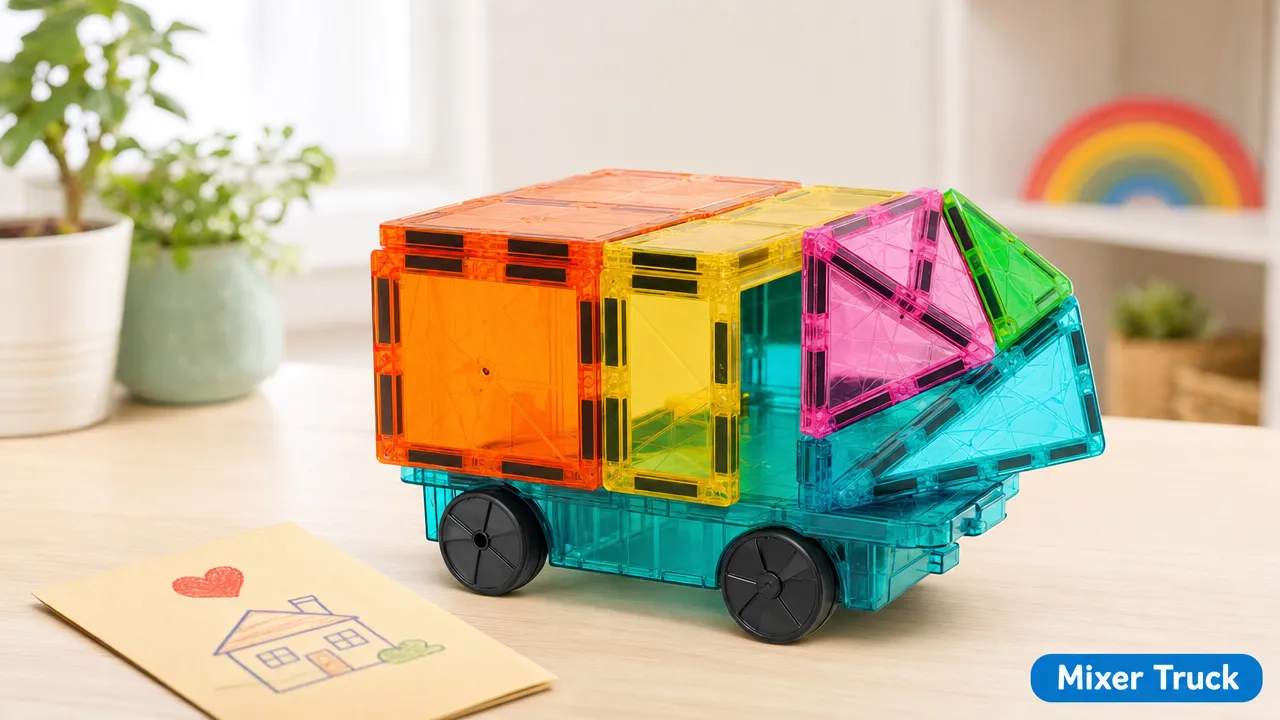
The most important detail is also the simplest: the Classic 106-piece set includes one wheeled chassis. Build one van on that chassis, play the route, and rebuild it later if a new vehicle idea arrives. This is not a fleet day. It is one hardworking little vehicle day.
Try this flexible build order:
-
Place the wheeled chassis on the chosen play surface. Give it a moment of importance. It is about to have a busy schedule.
-
Make a low body. Attach a few squares or rectangles to create side walls or a simple cab area. A low body is often easier to keep manageable when the route has tight turns around a table leg or snack plate.
-
Choose a loading feature. Leave one side open, or use a door-frame, door-panel, or window-style piece as a pretend loading opening. It does not need to function like a real door. It only needs to make sense in the family story.
-
Try a cab or roof detail. Add one or two triangles as a sloped front, small roof, or cheerful sign topper. If the roof seems to be becoming a penthouse, remove a piece and call it a redesign.
-
Pause before using every tile. A simple van that is ready for play is more useful than a grand vehicle that is still negotiating its roofline when dinner is nearly ready.
The main goal is a recognizable delivery-van-inspired build, not an exact replica. A child may call the open side a parcel shelf, a snack counter, or a place where the driver waves to dragons. Each version works.
Make the van, not a perfect model
The delivery van works best when it stays low and story-ready. If a tall roof feels fussy, use fewer pieces. If the sides seem crowded, leave one open. If the van comes apart during a practice trip, reconnect it and simplify the section that got in the way.
That is not a failed build. It is the kind of real-world redesign that happens when a very important package must reach the couch before someone sits down.
The set has only one wheeled base, so finish this route before rebuilding it for a different story. There is no need for a fleet; one hardworking van already has plenty on its schedule.
Put the delivery stops in order
Now make the route cards. Write a large number on each optional paper card, then add a destination beneath it. Keep the words simple enough that everyone can recognize them quickly, or draw a small picture beside each one.
Here is a five-stop example:
| Stop | Card text | Optional parcel idea |
|---|---|---|
| 1 | Depot | Folded note |
| 2 | Library | Paper "book" |
| 3 | Bakery | Paper picture or light play-food item |
| 4 | Friend's house | Tiny drawing |
| 5 | Home | Empty van return |
Place the cards around the route area in numerical order for the first round. Put the optional parcel at the depot. Then let the van travel from Stop 1 to Stop 2, and onward until it returns home.
The family can share jobs around the same vehicle:
- One person builds or drives the van.
- One person places the cards.
- One person announces the next stop.
- One person loads and unloads the optional parcels.
After one easy round, mix up the numbered cards and put them back in order together before the next delivery. Keep the tone light. This is a family story game, not an exam with a clipboard.
Easy stops for a made-up neighborhood
A route can borrow familiar places or become gloriously strange. Try:
- The library
- The bakery
- Grandpa's porch
- The pet shop
- The park bench
- The moon base
- The sock museum
- Home base
Choose places that are easy to recognize from across the play area. A quick drawing on each card can help a child who is not reading yet. The picture does not need to win an art prize; a square with many ambitious little lines can be the library.
Test the route and revise the van
Before starting the full route, take the van on a short practice trip from the depot to Stop 1. This tiny test helps the family notice what is getting in the way without making the build feel like a science project.
If the top feels too tall for the table or rug route, remove a roof piece. If the parcel area has disappeared under a forest of triangles, open a side wall. If the cards are spread too far apart, bring them closer. The route should fit the home, not require the home to rearrange itself around a very determined toy van.
A few easy fixes can keep play moving:
| If this happens | Try this instead |
|---|---|
| Pieces are running low | Make a low van body with an open side rather than using tiles for a full roof. |
| The route feels crowded | Use three cards in a line along a rug edge or table border. |
| The build comes apart | Reconnect it, remove one upper section, and continue with a shorter van. |
| Siblings both want the chassis | Keep one shared van and swap driver, route-caller, and parcel-manager roles after a round. |
| Dinner is approaching | Make "Return to Depot" the final card and begin the reset. |
There is no need to promise that the van will travel in a particular way or carry a particular load. The playful test is simply about finding an arrangement that feels workable on today's surface.
This is also where the delivery story can change without starting over. Perhaps the library parcel has to go first. Perhaps Stop 3 moves closer to the sofa. Perhaps the driver decides the bakery is closed because all the imaginary muffins have gone to the moon. Keep the same van, rearrange the cards, and follow the new route.
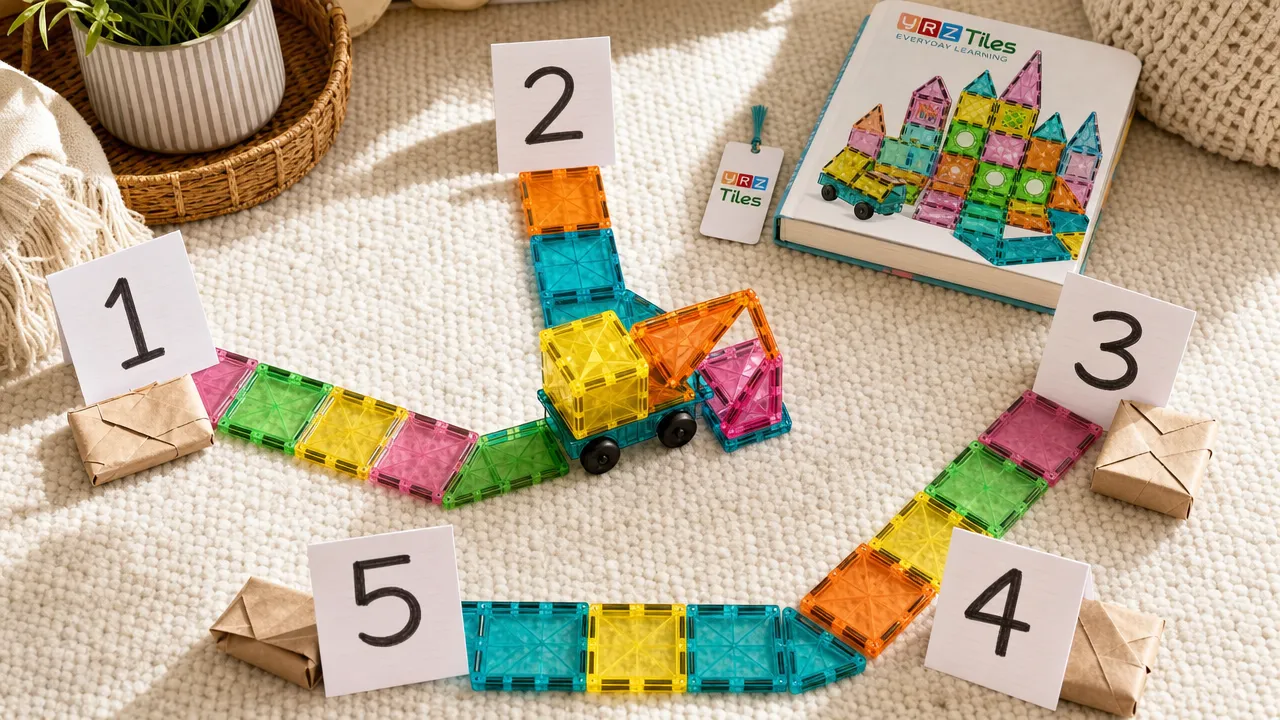
Adapt the route for real family days
For a short after-school window, build a very simple body and use only three cards. A quick Pick Up, Deliver, Home route can fit between snack and the next thing on the calendar.
For a slower weekend morning, make five stops, add a book as a library landmark, and let the van stop for a pretend repair if the story calls for it. One child might place the route cards while another rebuilds the loading opening. Grandparents and caregivers can join without needing to memorize a model: asking "Where should this go next?" is enough to keep the story rolling.
For siblings, separate the route jobs from the chassis. One child can move the van while another finds the next numbered card and a third places the parcel. Switch after a complete delivery rather than halfway between stops, so everyone knows when the handoff happens. With two children, alternate driver and dispatcher roles after each trip.
If a child is still learning number order, lay the cards out together before the van moves. Point to the first card and ask, "Where does the van go after this?" If the child reverses two stops, treat it as a route change instead of a wrong answer. Put the cards in the new order, then tell the story that matches it.
Older children can add one simple constraint: the van must return to the depot before visiting the last stop, or one road is closed and the cards need a new order. Keep the challenge inside the pretend story. No worksheet or score is needed.
When the family invents a new destination, add it only if there is space. A four-stop route that fits along the rug is more usable than a twelve-stop tour winding through a busy hallway. Keep walking paths clear, and move the game rather than asking everyone else to step over it.
Return the van to the depot
Cleanup works better when it is part of the story. Announce that the delivery van has returned to the depot, then give everyone a small final job:
- Gather the optional parcels, figures, books, trays, and paper cards.
- Save favorite stop cards for another day or recycle them.
- Take the van apart and separate the single wheeled chassis.
- Gather tiles using the family's usual storage routine.
- Inspect pieces before putting them away.
Safety note: This activity is for Ages 3+. An adult should inspect pieces before play. Stop using cracked, separated, or damaged pieces, or any piece with an exposed or missing magnet. Keep magnet-containing pieces away from younger children. If magnet ingestion is suspected, seek immediate medical attention. See the U.S. Consumer Product Safety Commission's magnet safety guidance for more information.
A delivery route does not need a huge floor plan or a flawless vehicle to feel complete. One van, a few numbered stops, and a wildly overqualified paper parcel can be plenty. Tomorrow, the same chassis can head out again with a new body, a new route, and probably one more stop at the sock museum.