

32-Piece vs 100-Piece Magnetic Tiles: How Much Building Space Do You Need?
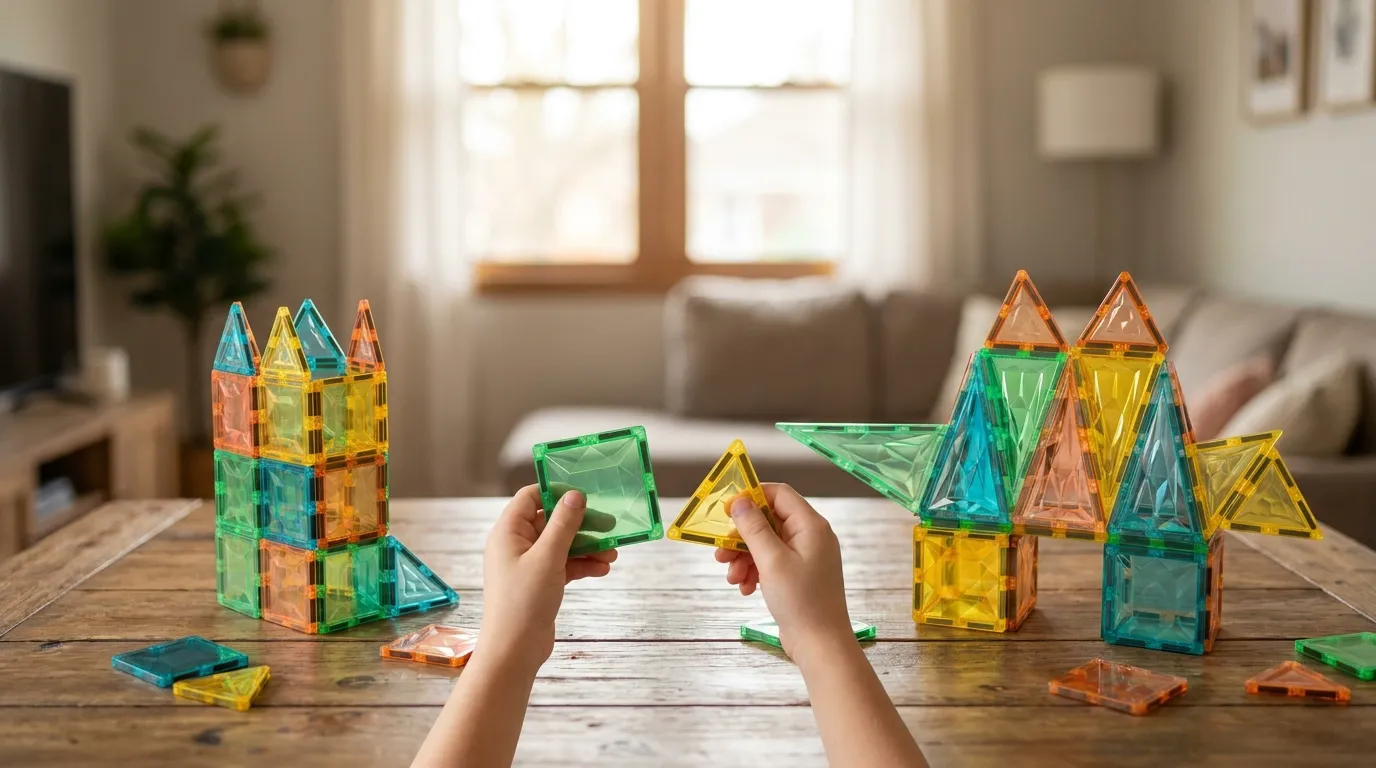
Sometimes the biggest challenge isn't finding space for the kids to play, but making sure there are enough tiles for all their brilliant ideas.
For parents comparing magnetic tile sets, "building space" isn't usually about the size of the table or how big the playroom is. It's more about how many tiles are available for all those walls, roofs, patterns, towers, vehicles, tiny details, and separate projects they dream up. When you're looking at a 32-piece set versus a 100-piece set, the real question is pretty simple: how much can stay built while new creations are taking shape?
Both the YRZtiles 32-piece magnetic tile set and the YRZtiles 100-piece magnetic tile set are part of the Classic magnetic tile collection. That difference of 68 pieces changes how a family approaches solo playtime, how siblings play together, and even how they share building projects.
Start with the Shared Piece Pool
When you're thinking about magnetic tile sets for group play, it helps to imagine all the pieces as a shared pool of materials, rather than expecting a certain size of finished building. Having more pieces doesn't automatically mean a taller tower, a bigger house, or a set number of completed structures. The shapes a child wants and the design they're aiming for make all the difference.
Still, the sheer number of pieces does influence choices during play:
- A smaller collection often encourages a bit of prioritizing. A builder might have to decide if their project needs a wider base, taller walls, or a roof.
- A larger collection means more pieces are still around for tweaking, adding on, and those extra little details.
- Shared playtime becomes much smoother when one child can keep their section together while another experiments nearby.
- Starting parallel projects feels more realistic when there's enough material for each child to begin without immediately having to "borrow" from someone else's build.
The 32-piece set works well for focused, compact building. The 100-piece set offers a bigger common pool for families where you often have more than one idea unfolding at a time.
What 32 Pieces Support
A 32-piece set can be a thoughtful choice, especially if play usually revolves around one builder, a quick activity, or an idea an adult suggests. It's also a smart option for families who want a manageable starting point before deciding if they want to grow their collection.
Building Ideas for a 32-Piece Set
When you have a 32-piece set, good building ideas tend to focus on one main goal. You could try a flat color pattern, a geometric mosaic, a small enclosure, a little vehicle-inspired shape, a simple tower, or just one piece of a pretend play scene. These are flexible ideas, not strict blueprints for specific models.
With fewer pieces, children often get creative with their design choices. They might use a tile for a wall instead of a floor, take apart one side of a structure to finish another, or transform a completed pattern into something entirely new. That rhythm of building, taking apart, and reusing fits a smaller set so naturally.
Focused Challenges for 32 Pieces
Magnetic tile challenges with 32 pieces can make a limited supply feel quite intentional, rather than like a restriction. You could try prompts like:
- Build a shape using at least two colors.
- Make a structure that has an opening.
- Create a design you can look at from all four sides.
- Build one object, then change it into a different object using the exact same pieces.
- Work together on one shared scene instead of two separate ones.
For two children, a 32-piece set can work especially well when they're playing cooperatively. One child might choose the base pattern while the other adds the top section. If both children want to build their own independent, ongoing projects at the same time, that limited pool will probably mean a lot more turn-taking, trading, and rebuilding.
What 100 Pieces Support
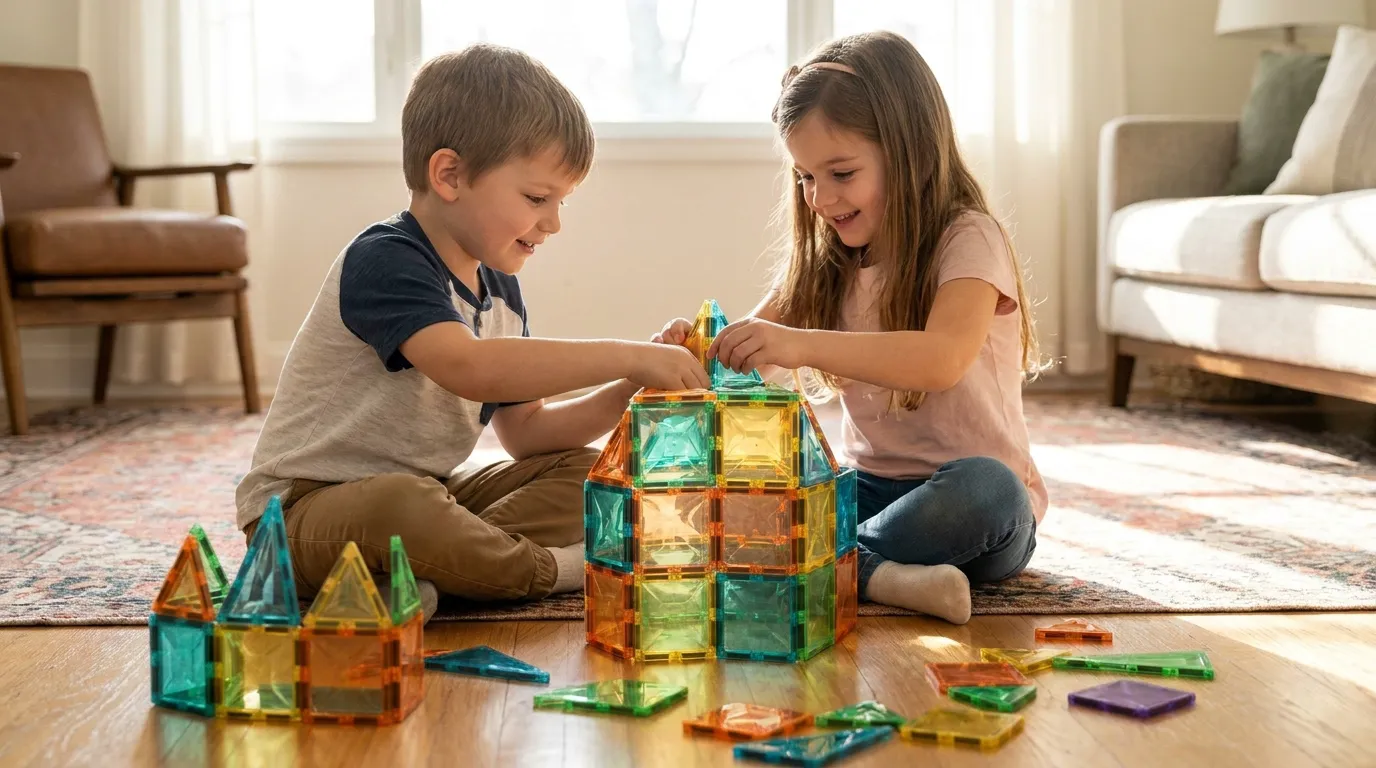
The 100-piece option feels like a better fit when shared building is a regular part of playtime. A larger collection doesn't magically stop all disagreements, but it certainly gives children more materials to share, combine, change, and even leave in place without disrupting someone else's project.
A helpful way to approach large builds with 100 magnetic tiles is to start with a shared purpose rather than a fixed outcome. The children might decide to create a neighborhood, a series of connected geometric structures, or a setting for pretend play. One child can start a base while another works on an upper section or a side feature.
This set supports geometric construction with familiar tile shapes. Just remember, the total piece count alone won't tell you how many of each specific shape you'll have for a particular plan. It's always good to peek at the current product page before you start planning a build that needs exact quantities.
How to Share a 100-Piece Set
If you're thinking about dividing 100 magnetic tiles for group play, try not to assume that a perfectly equal count will always feel fair. One child might need more flat pieces for a floor, while another needs a few specific shapes for a roof. A flexible arrangement is usually much more helpful than a rigid split, because different builds simply call for different shapes.
| Play arrangement | How it works | Best for |
|---|---|---|
| One shared pool | Everyone picks from one central pile and adds to a joint build. | Cooperative projects |
| Separate project zones | Each child starts with their chosen materials in their own area, then trades if they need to. | Parallel building |
| Central connector pool | Children keep their main pieces nearby, and a small shared pile is available for joining projects. | Builds that might connect later |
Before play begins, it can be helpful to set a few simple expectations. Decide if children are allowed to take tiles from sections that are already built. Choose a spot for any unused pieces. Agree on whether the project will be rebuilt at the end of playtime or left standing for later. These little conversations can make managing a magnetic tile set for two children feel much smoother.
Choose by Household Scenario
The "right" set depends less on a child's age alone and more on how your family plans to use the tiles. Think of this comparison as a friendly planning guide, not a guarantee of how engaged they'll be or what specific things they'll build.
| Household scenario | 32-piece set | 100-piece set |
|---|---|---|
| One child trying magnetic tiles for the first time | A compact, easy-to-commit-to starting point. | More materials for lots of open-ended play. |
| Occasional gift or travel-friendly activity | Simpler to pack up and reset after a focused activity. | Better if the gift is meant to support a wider range of projects. |
| Two children building one project | Works well with a clear, shared idea. | Offers more flexibility for separate parts and making changes. |
| Siblings building independently | Will likely involve lots of sharing and rebuilding. | Better supports children building side-by-side from a bigger shared pool. |
| Frequent playdates or family building time | Best for shorter, guided activities. | Better suited for regular shared ideas and connected building. |
| Expanding an existing collection | Think about your household's current needs first. | Adds a larger pool of pieces; choose it for the kinds of projects you want to build, rather than just assuming it'll work with another set. |
For a single child, the YRZtiles 32pcs STEM Magnetic Tiles and Building Blocks provides a compact collection of materials for starting out, tackling small challenges, and quick resets. For siblings, regular playdates, or children who like to keep one project intact while starting another, the YRZtiles 100pcs STEM Magnetic Tiles and Building Blocks offers more breathing room in the piece pool to keep all those ideas flowing.
Keep the Decision Focused
Some related comparisons deserve their own guide. For example, a 32 vs 106 piece magnetic tile set comparison isn't quite what this article is about, as we're looking at the 32-piece and 100-piece Classic sets. Similarly, comparing 100 piece classic magnetic tiles to MagFlake magnetic tiles 58 isn't a direct comparison because MagFlake offers a different style of play.
So, when you're making this decision, try to keep the question practical: will these tiles mainly support one focused building session, or do you need enough shared material for parallel projects, connected sections, and frequent group play? Pick the 32 pieces for compact exploration. Go for the 100 pieces when a larger shared building pool is already part of your family's plan.