

25 Magnetic Tile Building Ideas Kids Can Try at Home
Magnetic tiles are useful at home because one set can become a flat picture, a small building, a vehicle, or a story setting. The ideas below are designed for ordinary magnetic tile play and can be adapted to the YRZtiles Classic sets. Some are also suitable for the separate 58-piece MagFlake system, but MagFlake's slot-interlocking format and themed pieces should be treated as its own product experience.
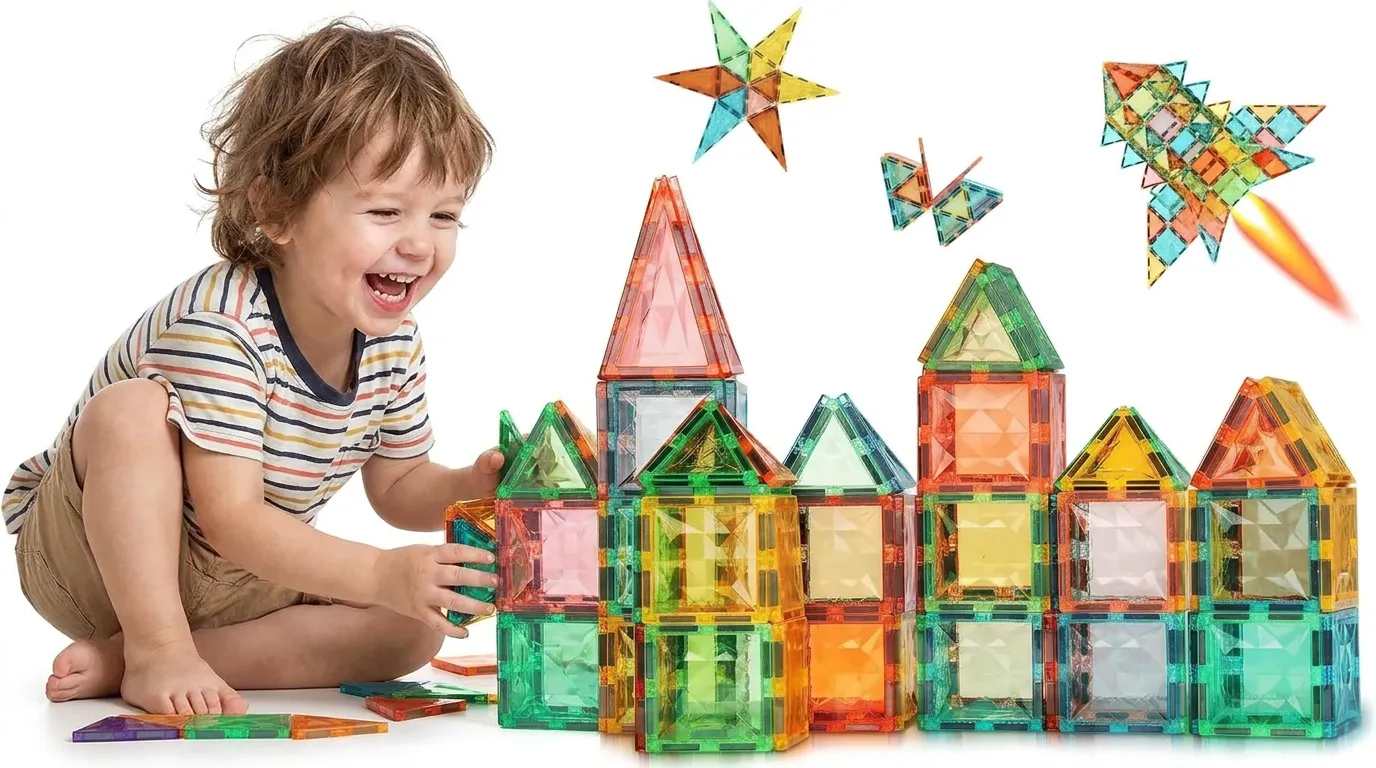
Before starting, use an open floor or table, bring out only the pieces needed for the prompt, and follow the product's age grade. The YRZtiles products reviewed for these ideas are marked ages 3+. An adult should inspect pieces before and after play, especially when younger children or siblings are sharing.
Flat designs and shape challenges
-
Color path: Arrange squares and triangles into a path that alternates two colors. Ask the child to continue the rule for five more pieces. This works with a small set and makes a quick warm-up.
-
Symmetry butterfly: Build one wing on a clear surface, then make the other wing look like a mirror image. The result does not need to be perfect; ask which shape or color was hardest to copy.
-
Flat rocket: Make a long center, a pointed top, and two side fins. Try a second design with a wider body and compare the silhouettes.
-
Geometric fish: Use a large shape for the body and triangles for a tail or fins. Change the tail direction to show whether the fish is swimming left or right.
-
Flower pattern: Start with a center piece and repeat a color or shape around it. A MagFlake build can include its documented theme pieces, while a Classic build can make the flower entirely from geometric tiles.
-
Robot face: Create a rectangular or square face, then add eyes, a mouth, and a control panel using contrasting colors. Give the robot a name and one job.
-
Shape sorting station: Put several shapes in small groups and ask the child to explain the sorting rule. The rule can be color, number of corners, size, or whether the piece is a triangle or quadrilateral.
-
Pattern detective: Make an AB, AAB, or ABC pattern with a deliberate mistake. Ask the child to find the break and repair it.
Buildings and small worlds
-
Open-sided house: Build three walls and a roof, leaving one side open so the child can see inside and continue the story. Add a doorway if the set includes a documented door piece.
-
Window house: With the 106-piece Classic set, place its confirmed window pieces in different walls. Compare how a round, arched, or gridded window changes the look of the same building.
-
Castle gate: Use the 106-piece set's doors or open frames to make an entrance, then add two low towers. Keep the structure on the table and do not invite children to climb into it.
-
Animal shelter: Design an entrance, a resting area, and a low fence for a toy animal. Ask what the animal needs inside and how a caregiver would reach it.
-
Community block: Divide a 100-piece set between two or three builders. Each person creates one place, such as a home, shop, school, or park. Connect the locations without taking apart each person's main building.
-
Market stall: Make a counter and a roof. Use paper placed beside the toys for pretend labels, not attached to the tiles. Take turns as the shopkeeper and customer.
-
Garage for one chassis: The 106-piece set includes one wheeled chassis. Measure its width by placing tiles beside it, then build a garage entrance that leaves room for the chassis to pass. This is a design challenge, not a claim about a vehicle's load capacity.
-
Bridge with clearance: Build two short supports with a small gap. Make a bridge that leaves enough room for the chassis or a lightweight paper character to pass underneath. Do not test with heavy objects, pets, or body weight.
-
Low maze: Build a route from one open entrance to one open exit using low walls. A child can move a paper character around the outside or guide it along the floor without climbing into the structure.
-
Tiny world tray: Set a tray or placemat as a boundary. Build one compact scene, such as a garden, station, or animal home, using only the pieces inside the boundary.
Family and engineering prompts
-
Architect and builder: One person describes a small structure using words such as above, beside, under, and next to. The other person builds without seeing a model. Switch roles and compare what each builder understood.
-
One piece each: Take turns adding one piece to a shared build. Before placing it, each person says what the new piece is meant to do. This supports turn-taking without making speed the goal.
-
Wide base test: Make one low tower with a broad base and another with a narrow base. Observe which one stays standing during normal table movement. Do not shake or hit the structure.
-
Two solutions: Give both builders the same task, such as making a roof or a bridge. Let each person create a different solution and explain what they changed.
-
Rebuild after a collapse: When a model falls, ask the child to identify one likely weak point. Change only that section, rebuild, and compare the second version. Treat the result as observation rather than a pass-or-fail test.
-
Story setting relay: One person builds a setting, the next adds a place for a character, and the third adds a path or entrance. Each person contributes one sentence to the story.
-
Design review: End with three questions: What is the build for? What part worked well? What would you change next time? Take a photo only if it helps the child remember the idea, then count and store every piece.
Choosing a set for these ideas
The 32-piece Classic set is suitable for flat patterns, small houses, and short challenges. The 100-piece Classic set gives siblings more room to build a neighborhood or a larger structure. The 106-piece Classic set is the best match for the specific window, door, open-frame, and single-chassis ideas above. MagFlake can support many of the flat, story, and family prompts, but its magnetic and slot-interlocking format should not be described as identical to the Classic line.
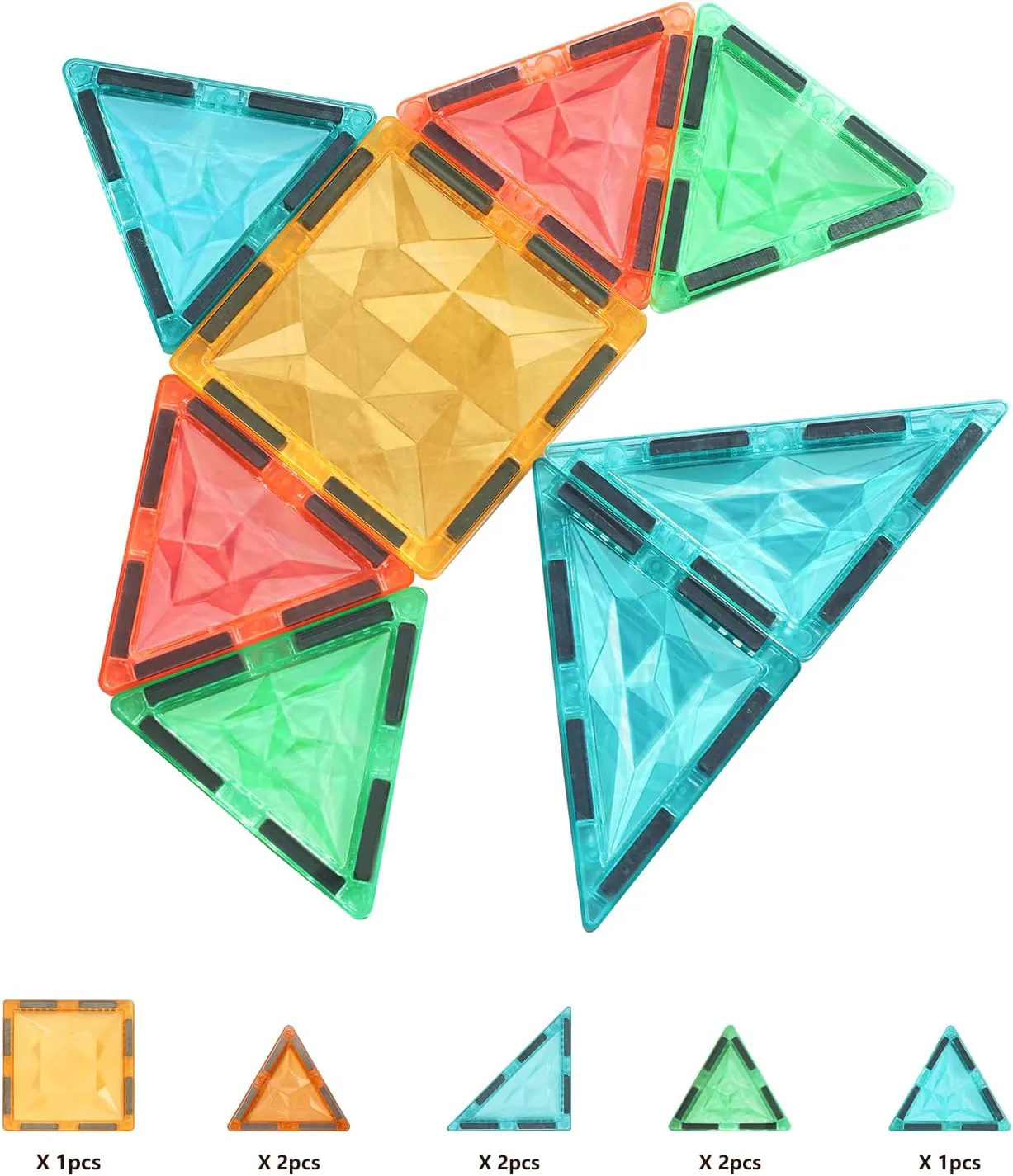
For product details, compare the YRZtiles 32-piece set, 100-piece set, 106-piece set, and MagFlake 58-piece set. Check the live listing for current availability, age guidance, and contents.
Safety reminder
Remove any tile with a crack, split seam, loose section, sharp edge, or possible exposed magnet. Do not tape or glue damaged tiles for continued use. Keep all magnet-containing pieces away from children below the labeled age range and gather the set after play. If a magnet may have been swallowed or inserted into the body, seek immediate medical attention. The U.S. Consumer Product Safety Commission magnet guidance explains why suspected magnet ingestion is urgent.
The most successful magnetic tile building ideas leave a child with a choice. Start with one prompt, use a manageable number of pieces, and let the next build come from what the child notices.