

12 Small-Set Magnetic Tile Challenges Using 32 Pieces or Fewer
A compact tile collection can still lead to satisfying builds when the prompt is clear. Thoughtful planning a small shared activity is less about making a huge structure and more about giving each child a role, a tile limit, and an interesting problem to solve.
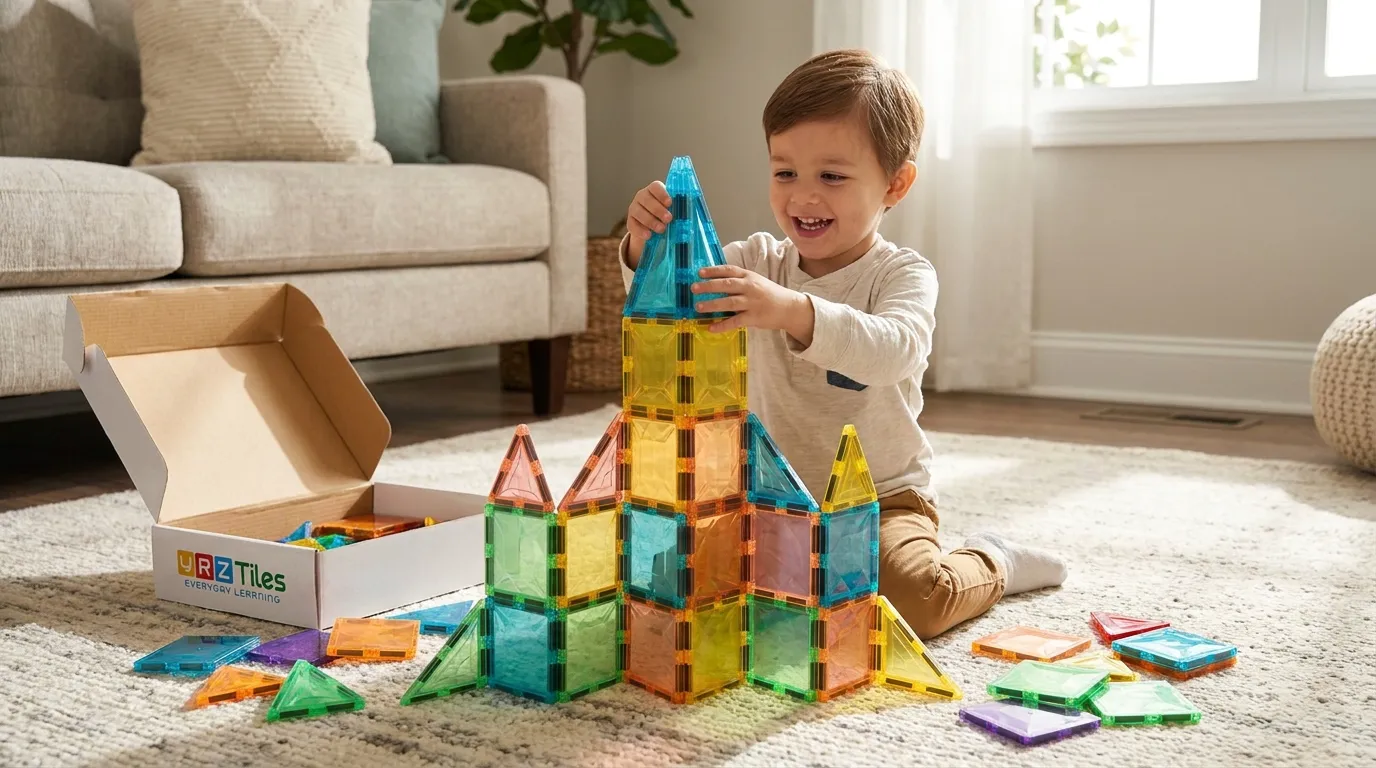
Every activity below uses 32 Classic magnetic tiles or fewer. They do not require an exact shape inventory, special windows, a wheeled chassis, cards, or themed accessories. Children can simply choose from the tiles available in their set. For a compact starting point, see the YRZtiles 32-piece Classic magnetic tile set.
Start with a clear rule
Small-set play works best when everyone can see the goal and the tile cap. Instead of asking children to "build anything," offer one simple rule: make a picture, alternate turns, use no more than 12 tiles, or leave tiles for a connector at the end.
For a two children sharing the set, try one shared build or give each child a small pile to begin with. The goal is not perfectly matched shapes. It is a fair starting point and a shared finish.
| Planning choice | Simple way to use it | Why it helps |
|---|---|---|
| Shared build | Children add one tile at a time | Makes each contribution visible |
| Split and connect | Each child starts a mini-build, then joins them | Gives both builders ownership |
| Role switch | One child plans while the other places tiles, then switch | Encourages conversation |
| Tile cap | Set a limit before building begins | Keeps the project compact and focused |
Household additions are never necessary. When mentioned below, they are clearly labeled optional and not included.
Twelve challenges for 32 pieces or fewer
These ideas combine flat art, patterns, compact architecture, balance, storytelling, and cooperative play. Each challenge includes a setup, a constraint, and one optional extension.
1. Picture postcard
Setup: Use up to 16 tiles to make a flat picture of a favorite place, such as a park, beach, bedroom, imaginary island, or space station.
Constraint: Include a main subject, a background detail, and one clue that tells viewers where the scene takes place.
Optional extension: Optional and not included: Place a sheet of paper beside the design so the child can dictate or write a one-sentence postcard message.
2. Make-a-creature silhouette
Setup: Arrange up to 18 tiles flat to create an animal, robot, sea creature, or completely invented character.
Constraint: Give the creature a name and one unusual feature, such as a tiny home, a long tail, big wings, or a favorite snack.
Optional extension: Optional and not included: Place a toy figure beside the creature and ask what the figure notices first.
3. Repeat, pause, repeat
Setup: Use up to 12 tiles to create a short line, curve, or band that repeats a feature available in the set, such as color, orientation, or shape.
Constraint: Repeat the chosen rule at least three times, then leave one spot for another player to predict the next tile.
Optional extension: Optional and not included: Cover one tile with a small paper card while another player guesses which feature is hidden.
4. Mirror-me mosaic
Setup: One player starts a short flat design on one side of an imaginary center line. The second player creates a matching-looking half on the other side, using up to 20 tiles total.
Constraint: Every tile placed on one side needs a partner tile in a similar position on the other side.
Optional extension: Optional and not included: Use a strip of paper as a center line. Keep it beside the tiles rather than attaching it to them.
5. Tiny home, big purpose
Setup: Build a small open-sided shelter, room, hut, or animal home using up to 20 tiles.
Constraint: Explain who uses the space and name one feature that helps that character. A shelter for a rainy-day rabbit, for example, might need a covered corner.
Optional extension: Optional and not included: Add a small toy figure or a paper character near the finished structure.
6. One-room community place
Setup: Two players choose a familiar place, such as a library, bakery, pet shelter, clinic, museum, or fire station. Together, build one compact room or facade with up to 24 tiles.
Constraint: Each player adds one useful feature and explains its purpose before taking another turn.
Optional extension: Optional and not included: Make paper labels to place beside the build, such as "books," "help desk," or "pet beds."
7. Wide base, narrow top
Setup: On a clear, level surface, build two low freestanding structures using up to 16 tiles. Make one with a wider lower section and one with a narrower lower section.
Constraint: Before building each version, predict which design may stay upright more easily while left untouched.
Optional extension: Optional and not included: Record predictions and observations with pencil marks on paper.
Keep the builds low. This is an opportunity to compare and redesign, not to test structural load or place objects on top.
8. Build the crossing
Setup: Use up to 18 tiles to make two low supports with a small gap between them. Then create a short crossing, archway, or route that joins the sides.
Constraint: The crossing must solve an imaginary problem, such as helping a character travel from one side to the other.
Optional extension: Optional and not included: Use a toy figure as the traveler.
Do not test the crossing with books, cups, hands, or body weight. The story is the challenge, not a weight-bearing test.
9. Three-scene story path
Setup: Create three small flat or low-built scenes using up to 24 tiles total. Make one scene for a beginning, one for a problem, and one for an ending.
Constraint: Tell the story using the words "first," "next," and "last." Each scene needs one event.
Optional extension: Optional and not included: Place paper cards labeled "First," "Next," and "Last" beside the scenes.
10. Rescue the lost explorer
Setup: Build a compact safe place, route, or signal design for an imaginary explorer who needs help. Use up to 20 tiles.
Constraint: Name the explorer's problem, make one design choice that addresses it, and explain how the story ends.
Optional extension: Optional and not included: Use a toy figure, paper character, or small household object as the explorer.
This prompt keeps the physical build simple while inviting children to add detail through narration.
11. One tile each
Setup: Start a shared build with a broad prompt, such as "make a mystery machine," "create a tiny city," or "build an animal habitat." Use up to all 32 tiles.
Constraint: Each player adds only one tile per turn and may not remove a tile another player placed. Before placing a tile, the player says what it contributes.
Optional extension: Optional and not included: Use a timer if brief turns help the group stay organized. Speed does not need to be the goal.
This is one of the most useful challenges for a 32-piece set for siblings, partners, and small classroom groups because every builder gets a visible turn.
12. Split, build, connect
Setup: Divide the tiles into two roughly similar piles by total number. Each child creates a mini-place, such as a home, garden, shop, shelter, or landing spot. Then connect the two places using the remaining tiles.
Constraint: Each child must keep the first build compact enough to leave several tiles for a shared path, wall, connector, or meeting point.
Optional extension: Optional and not included: Use painter's tape on the play surface to mark each builder's starting area. Do not attach tape or labels to the tiles.
This final challenge turns a limited collection into a cooperative project with a clear beginning, middle, and shared ending.
When a larger set makes sense
The difference between 32 and 100 pieces is mainly about how many ideas can happen at once. A 32-piece set is well suited to focused prompts, turn-taking, flat designs, and small connected builds. A 100-piece set gives an adult more tiles to allocate among simultaneous builders or stations.
If a group uses a 100-piece set, begin with two roughly equal pools for two children and leave a small shared pile for negotiated additions. For three or four children, assign mini-build stations or shared roles, such as builder, pattern maker, picture maker, and connector. Divide by total tile quantity instead of expecting identical shape assortments.
For a larger shared project, start with a shared base, central scene, or connected neighborhood. Then add compact sections around it. The 100-piece Classic magnetic tile set offers more room for that kind of shared planning.
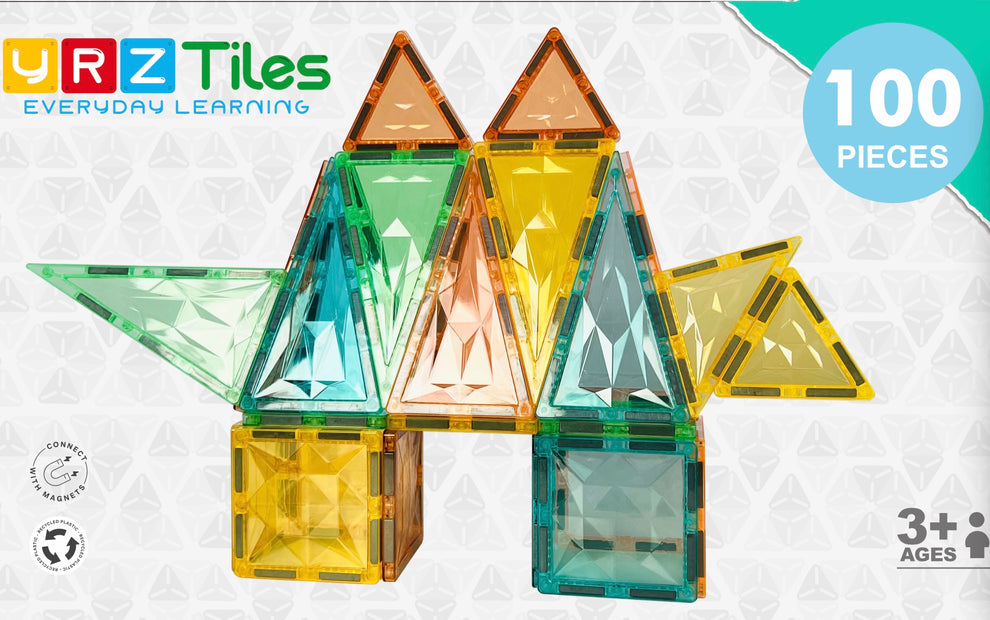
When comparing the 32-piece and 106-piece Classic sets, remember that the difference is not only six additional pieces. YRZtiles documentation identifies architecture-oriented pieces and one wheeled chassis in the 106-piece Classic magnetic tile set. Those documented components should not be assumed to come with the 32-piece or 100-piece Classic sets.
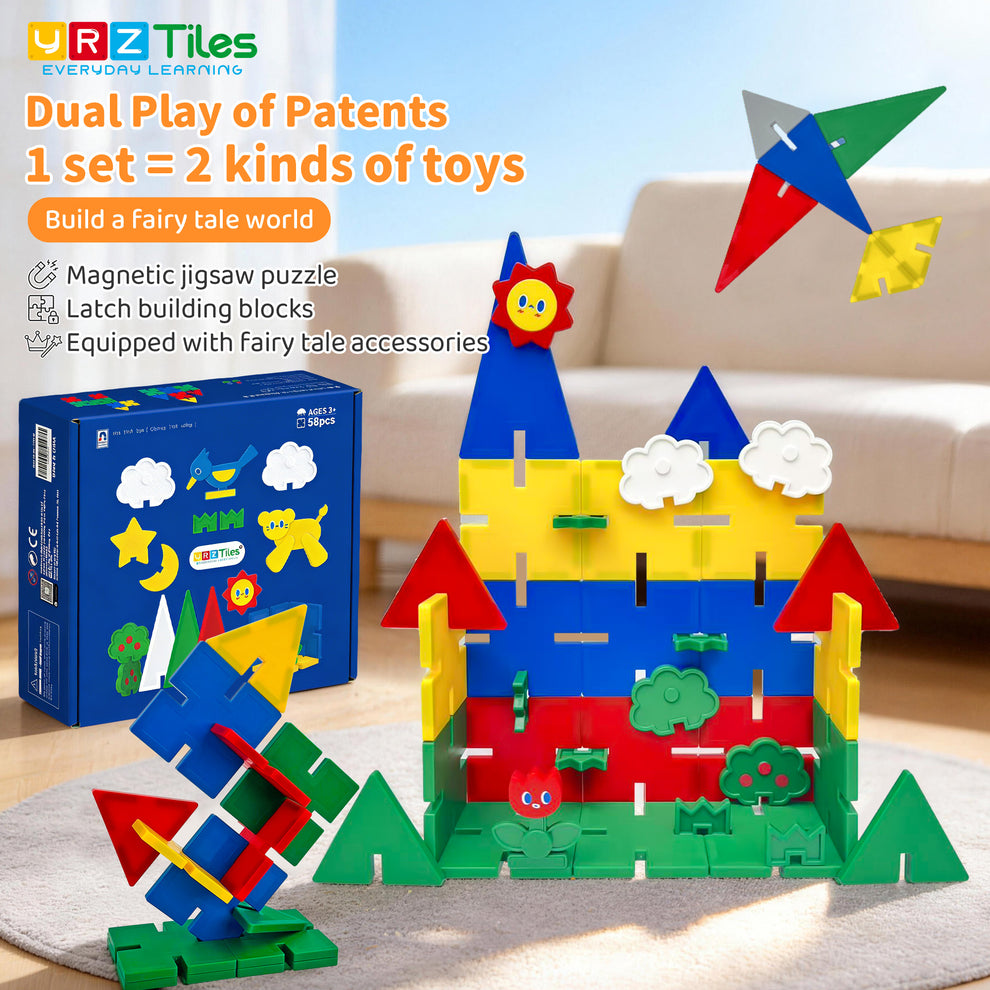
The 100-piece Classic and 58-piece MagFlake sets also need a clear distinction. Classic magnetic tiles and the 58-piece MagFlake hybrid set are separate systems. MagFlake uses a hybrid magnetic-edge and interlocking-slot approach. The 12 challenges in this article are written for Classic magnetic tile play and do not require MagFlake-specific functions, insert cards, decorative pieces, or accessories. For more activity inspiration, browse YRZtiles play ideas and news.
Safety before and after play
Safety note: Inspect pieces before play. Stop using any cracked or separated piece or any piece with an exposed or missing magnet. Keep magnet-containing pieces away from younger children. Seek immediate medical attention if magnet ingestion is suspected.
Follow the Ages 3+ guidance shown in current YRZtiles product materials. Count pieces during cleanup, especially after group activities, so missing or damaged pieces can be noticed promptly.
A small set can support big ideas
Effective planning a small shared activity starts with the activity structure, not the size of the pile. A 32-piece collection can support pictures, patterns, short stories, low structures, design comparisons, and shared builds when the goal stays intentionally compact.
Repeat a favorite challenge with a new setting, story, tile cap, or turn-taking rule before adding complexity. A small collection does not need to produce a giant build to create a meaningful invitation to imagine, explain, revise, and build together.